
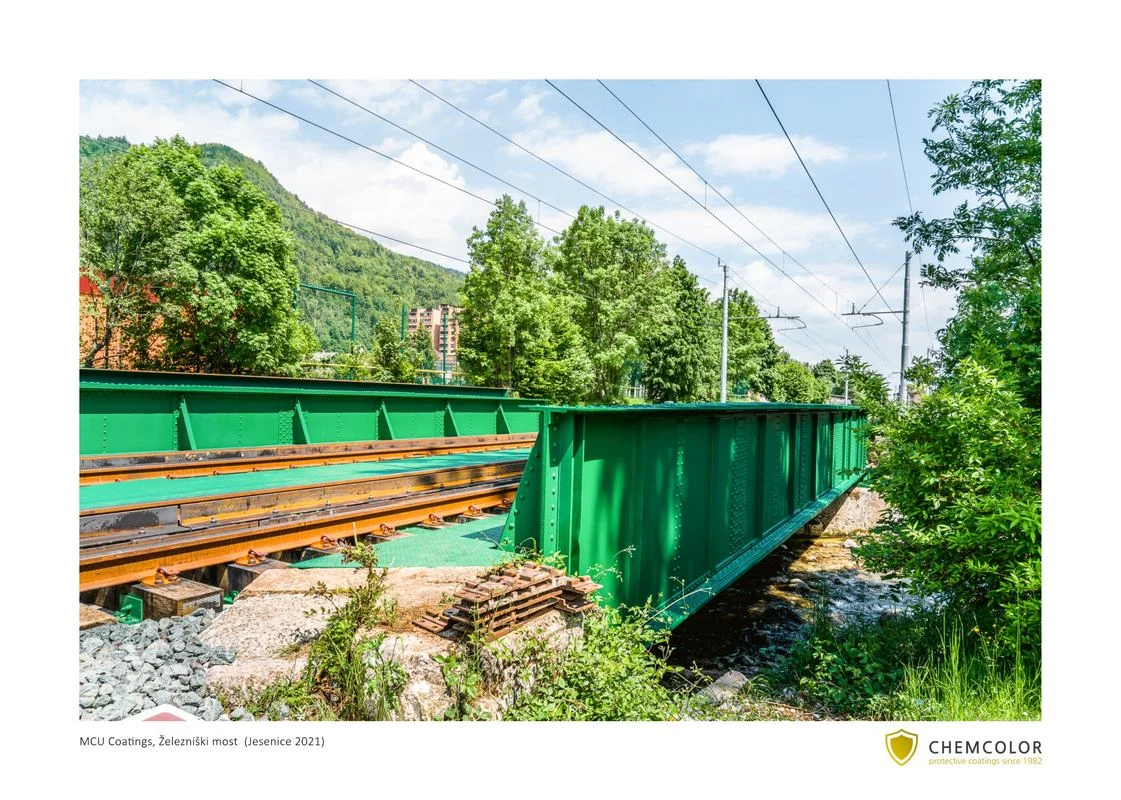
When protection needs to suit the site.
Bridges, industrial equipment and outdoor structures need a coating system that can be applied reliably in challenging conditions. MCU combines single-component technology, a range of primers and finishes, and options for maintaining existing protection.
Discuss MCU ↗Moisture Cured Urethane
What does MCU mean?
MCU stands for Moisture Cured Urethane: a single-component technology in which atmospheric moisture initiates curing. There is no resin-to-hardener mixing ratio before application. The product still needs thorough mixing, while open containers must be protected from moisture and correctly resealed.
Single-component preparation
No dosing of components A and B. Fewer material preparation steps and practical handling for phased maintenance.
A wider application window
Selected MCU products can be applied at low temperatures and high relative humidity. Permitted conditions and recoat times are checked for the specific product and film thickness.
Maintenance that retains sound coatings
Where condition allows, sound, well-adhered existing coatings may be retained. The proposal follows inspection, cleaning and compatibility testing.
Where should MCU be considered?
Bridges and steel structures
Road and railway bridges, railings, beams and difficult-to-access details.
↗02Industrial maintenance
Local corrosion repairs and renewal of equipment and structures during planned shutdowns.
↗03Humid and coastal environments
Ports, hydropower structures and condensation zones require a dedicated specification. The specific product and complete system are assessed for immersion or permanent moisture.
↗Every coat has a purpose.
The specification follows corrosion exposure, preparation and the required appearance. This overview explains product roles; the number of coats and film thicknesses are defined for each project.
MCU-Miozinc
Zinc and micaceous iron oxide (MIO) combine galvanic and barrier protection of steel. For new protection, spot repairs and selected maintenance systems.
Product and documentation ↗MCU-Miomastic
Builds the protective barrier and supplements the system where exposure and the specified coating sequence require it.
Product and documentation ↗MCU-Miotopcoat
An aliphatic matt finish containing MIO for weather- and UV-exposed surfaces. The finish connects protection with the required appearance.
Product and documentation ↗Standard and NS: choose the matching data sheet.
Standard products and variants marked NS are treated separately. Check volume solids, coverage and film thickness in the data sheet for the exact version. MCU-Miomastic has separately labelled data sheets; specifications must not be transferred between versions.
Preparation remains the foundation.
We select abrasive blasting, suitable mechanical preparation or water cleaning according to the substrate and system. Grease, salts, contamination, loose rust and failing coatings are removed. Edges, welds and defects receive specific attention. Existing coatings are assessed for adhesion and compatibility; the substrate must meet the selected technical data sheet requirements.
How we prepare the work with you
Site assessment
Condition of the steel and existing coatings, access, exposure and preparation options.
System specification
Products, coating sequence, film thicknesses and treatment of details.
Application planning
Site conditions, equipment, permitted thinning and recoat intervals.
Application checks
Monitoring conditions, wet and dry film thickness, and agreed inspection stages.
Use the specified MCU thinner. Water or an unsuitable solvent can interfere with curing. MCU-QuickCure accelerator is included only where permitted by the selected system.
Planning resources
The application and systems guides are manufacturer archive documents in English. Current editions, exposure classification and the final specification are confirmed for your project.
MCU on completed projects
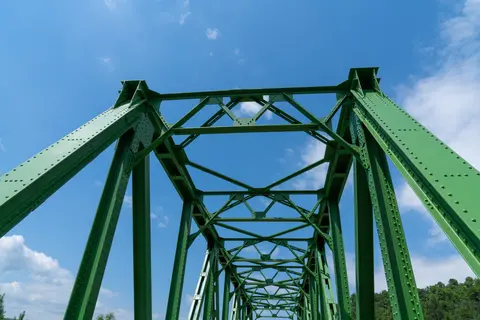
Corrosion protection · 2021
Refurbishment of the riveted structure of the Globoko bridge
Views of refurbishment work and protection of the steel bridge structure.
Sistem MCU-Miozinc 75 microns; MCU-Miomastic 75 microns; MCU-Miotopcoat 75 microns
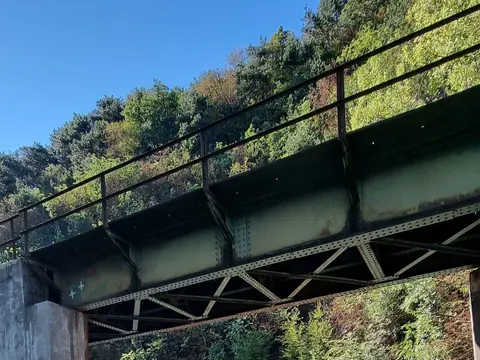
Corrosion protection · 2022
Preparation and corrosion protection of the Štanjel railway overpass
Views of the condition of a steel structure, preparation and protection of individual railway overpass components.
Sistem MCU-Miozinc 140 microns; MCU-Miotopcoat 80 microns

Roofs · 2022
Preparation and protection of the metal roof at Cinkarna Celje
Views of corrosion, surface preparation and detail work on a metal roof. A fully completed coating has not been confirmed in this selection.
Sistem MCU-Aluprime + MCU-Alutopcoat
Describe the structure and maintenance conditions.
Include photographs, location, the condition of existing protection and the planned scope. We will help define the next step.